alert-erroralert-infoalert-successalert-warningbroken-imagecheckmarkcontact-emailcontact-phonecustomizationforbiddenlockedpersonalisation-flagpersonalizationrating-activerating-inactivesize-guidetooltipusp-checkmarkusp-delivery-cashusp-delivery-delayusp-delivery-eveningusp-delivery-same-dayusp-delivery-storeusp-deliveryusp-exchangeusp-free-returnsusp-gift-cardusp-klarnausp-salearrow-backarrow-downarrow-left-longarrow-leftarrow-right-longarrow-rightarrow-upbag-activebag-inactivecalendar-activecalendar-inactivechatcheckbox-checkmarkcheckmark-fullclipboardclosecross-smalldownloaddropdowneditexternal-linkfullscreenhamburgerhd-filledhd-outlinehide-activehide-inactivelocate-targetlockminusnotification-activenotification-inactivepause-outlinepin-smallpinplay-filledplay-outlineplusprofilereloadsd-filledsd-outlinesearchsharesound-off-filledsound-off-outlinesound-on-filledsound-on-outlinesubtitles-cc-filledsubtitles-cc-outlinesubtitles-filledsubtitles-outlinewishlist-activewishlist-inactivezoom-outzoomapplefacebookgoogleinstagram-filledinstagrammessengerpinterestruntastictiktok-defaulttiktoktwittervkwhatsappyahooyoutube
Homepage
0
Your Bag is Empty

Climbing Shoes

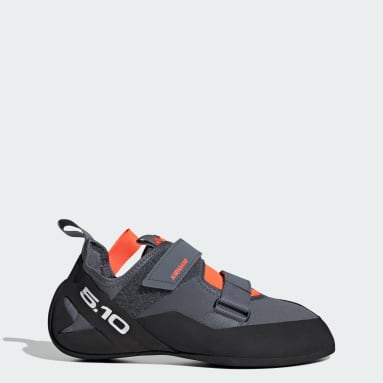
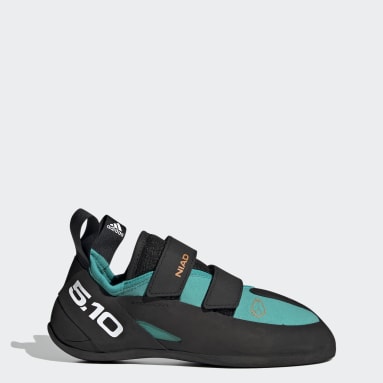
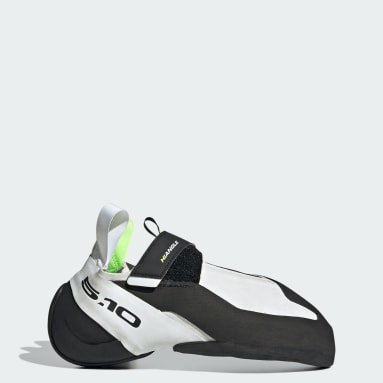
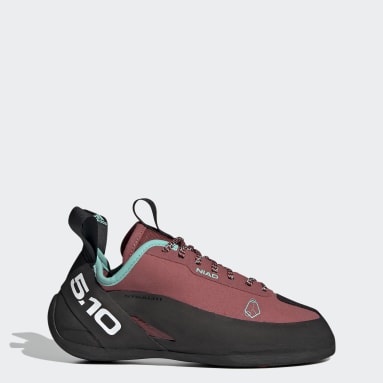
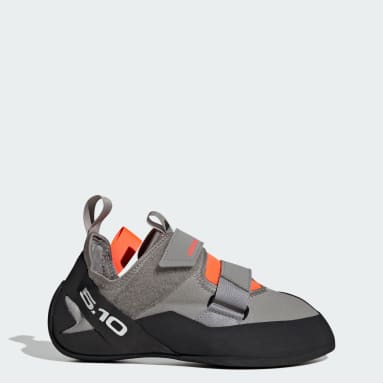
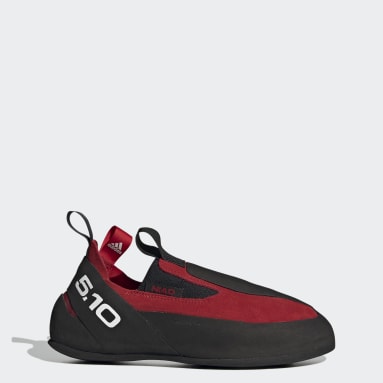
The only way is up. Slip into adidas Five Ten climbing shoes and you’re ready to start. Hook-and-loop straps lock your feet in, while tough rubber outsoles grip the cliff face during your ascent.

11 results

adidas Climbing Shoes

The type of climbing shoes you choose depends on the specific kind of climbing you do: bouldering, sport climbing, trad climbing or mountaineering. adidas makes climbing sneakers for climbers of all stripes. The most critical aspect of climbing footwear is the fit. Climbing shoes should fit snugly but not to a point that causes pain or discomfort. A snug fit ensures better control and precision on the rock face. Look for shoes that fit with little empty space around the toe box area. The shape and curvature of the shoe (known as the "last") are also important. Different shoe lasts are designed for different types of climbing. For example, a downturned last is more suitable for steep and overhanging climbs, while a flatter one offers more neutral performance.

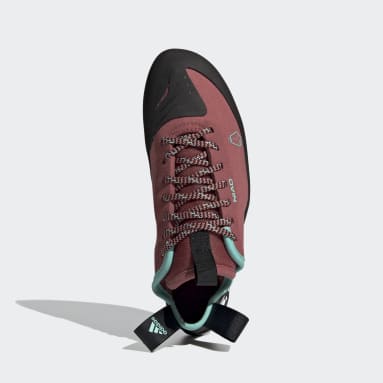
A solid, high-grip rubber sole is critical. Climbing footwear is made from uniquely sticky rubber compounds for high friction. Quality rubber supports your ability to smear, edge and grip small holds. You'll find climbing sneakers that use hook-and-loop closures, as well as those with laces. Some climbers feel that laces are more adjustable and easier to personalize, while others prefer the locked-in feel of hook-and-loop straps. The aggressive downturn shape, responsive midsoles and high-friction Stealth® Phantom rubber outsoles of adidas climbing shoes provide ideal support for scaling vertical or steep terrain. Browse climbing shoes for your next climbing adventure.

Climbing Shoes Frequently Asked Questions

Beginners should start with neutral climbing shoes, because these are designed to help you get a feel for the sport. Neutral climbing shoes have a flat to mild curve, which means your toes are not forced into a tight or bent position. This lets you focus on learning footwork and technique rather than worrying about sore feet. The flat shape gives your feet room to move naturally, so you can climb longer and build confidence with every session. For more details on what to look for, check out choosing rock climbing shoes.
An aggressive climbing shoe has a pronounced downturned curve, designed for strength on single-pitch climbs and small holds. Its curved shape makes it less ideal for multi-pitch climbs and precision foot placement. The downturned profile helps concentrate your power at the front of the foot,so you can generate more force on small edges or pockets, but can feel less comfortable on long climbs, since the shoe keeps your foot in a more curved position. Most climbers reach for aggressive shoes when they want that extra performance edge, especially on short, powerful routes where every bit of precision and grip matters.
Climbing shoes are made to fit close to your feet and gradually mold to your unique shape, giving you better sensitivity and grip on tiny footholds without causing discomfort or cutting off circulation. That snug fit lets you feel the rock and place your feet more accurately, which can help boost your confidence on harder climbs. When you try on climbing shoes, curl your toes just a bit, since shoes stretch and become more flexible as you break them in. This helps ensure they will not end up feeling too loose after a few sessions. Comfort matters because shoes that fit well help you focus on your climb, not your feet. Taking the time to find a pair that molds properly makes each climb feel more natural and enjoyable.