


Frigid temperatures are often not enough to stop truly dedicated golfers. What’s more, depending on where you live, golfing in the cold is an often-unavoidable reality. While certainly not ideal, many find it a better alternative than canceling a game altogether; in addition to drastically reducing the number of groups playing on the course, it offers a unique setting for golfers to improve their game amidst adverse conditions.
Aside from the general muscle stiffness affecting your swing, golf balls do not fly as far in cold weather due to air density, and there may even be restrictions on the course to protect the terrain.
First and foremost, though, is making sure you are safe and prepared to take on the elements in the first place — and while we do have an in-depth style guide on different looks for golf, it’s important to take a closer look at learning how to dress for golf in cold weather. So, how do golfers stay warm in the winter? We’ve put together a comprehensive guide on what to wear when golfing in the cold.
How to Dress Warm for Golf: Layering
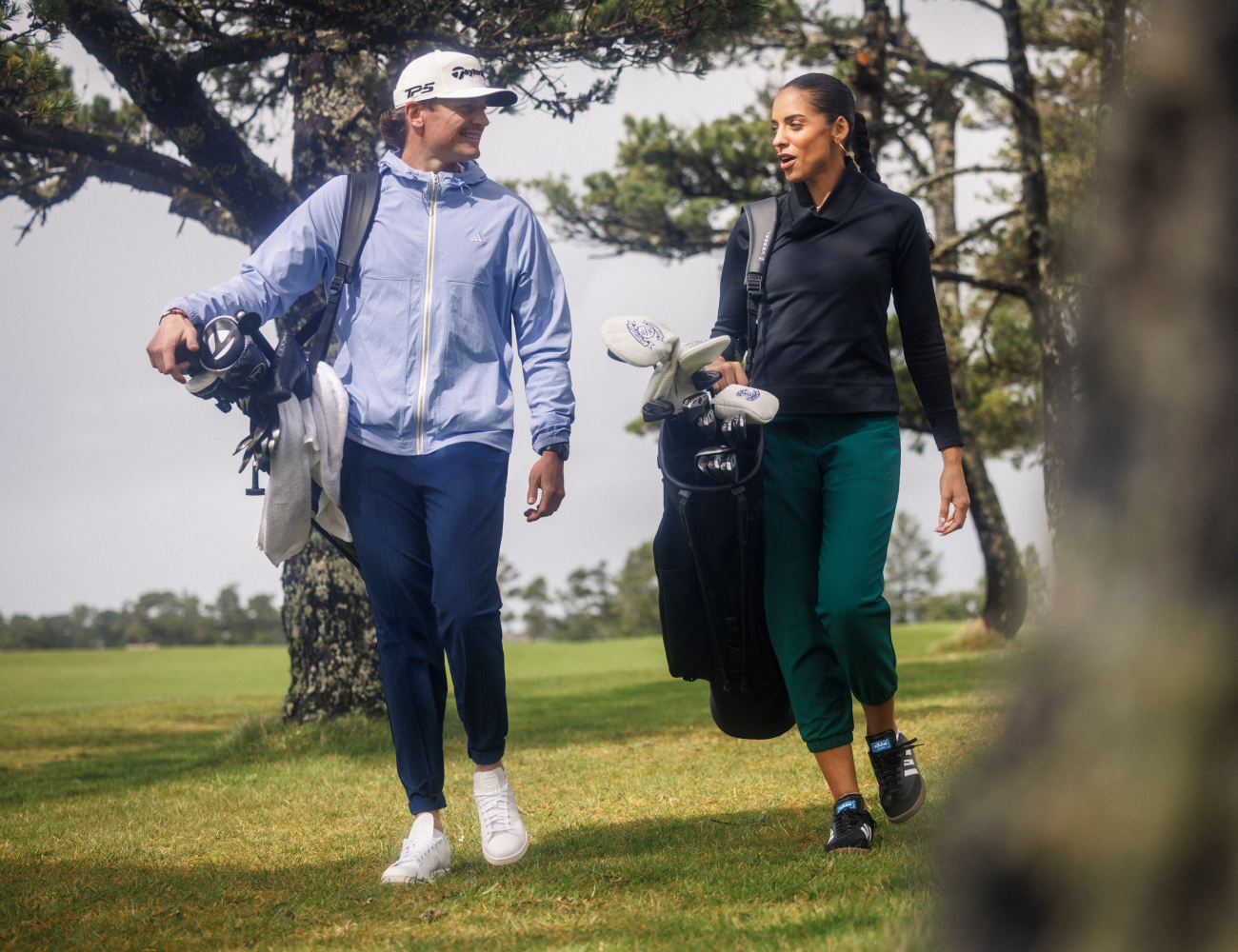
As with any outdoor sport in the fall or winter, layering is the most crucial part of being prepared, performing your best, and staying safe; cold weather can affect your flexibility and grip, causing discomfort even upon hitting the golf ball. As a caveat, wearing multiple layers can affect your movement, and we kept this in mind when compiling our guide on how to dress for golf in cold weather.
Base Layer
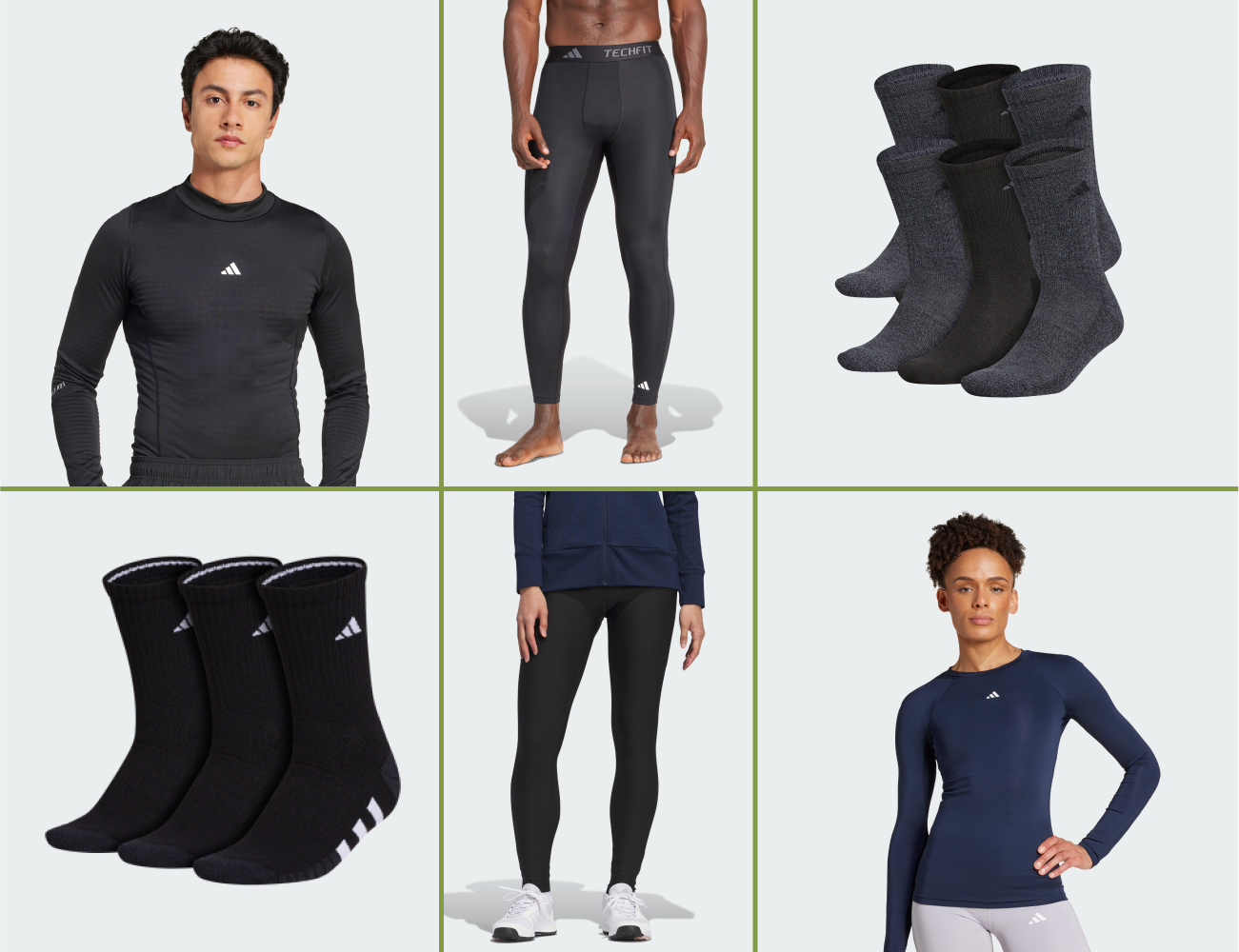
The foundation of your layering can potentially play the largest role in keeping you safe and warm once the weather dips into very cold temperatures. Ideally, this is something flexible and moisture-wicking that will maintain your core temperature — trapping heat as you play.
The most important factor when deciding what to wear when golfing in the cold, by far, is making sure it’s a snug fit; not only will this insulate you best, but it also will not interfere with your performance. Consequently, many players prefer base layers with compression, while others enjoy looser fitting options.
Men’s:
- Techfit COLD.RDY Training Long Sleeve Tee
- TECHFIT Compression Training Long Tights
- Athletic Cushioned Crew 6 Pairs
Women’s:
- Ultimate365 COLD.RDY Legging
- TECHFIT Long Sleeve Training Top
- Women's Ultimate365 TWISTKNIT Long Sleeve Shirt
- Cushioned Crew Socks 3 Pairs
Mid Layer
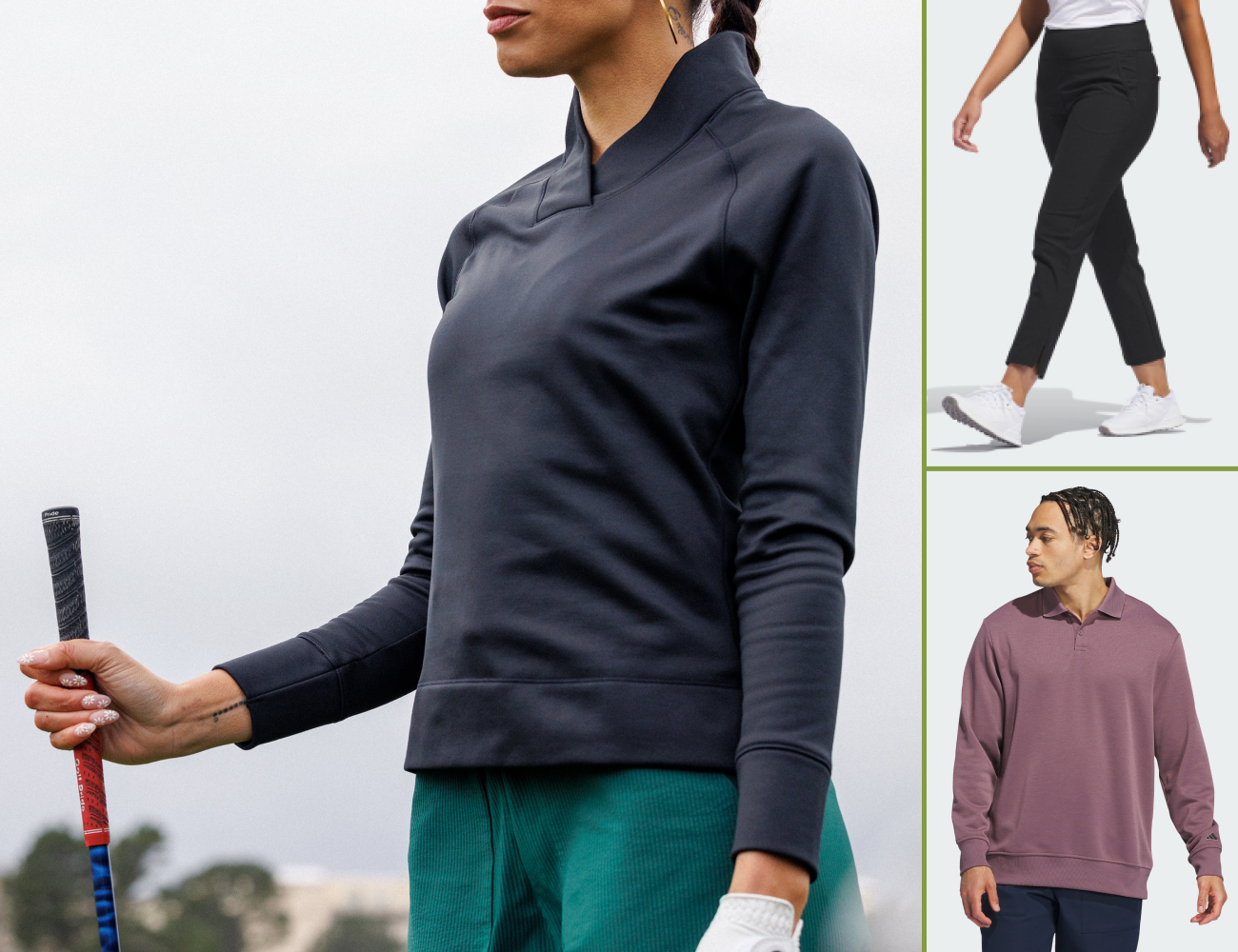
This is where classic golf attire — like the polo shirt — comes into play when understanding how to dress warm for golf; some golf courses may require a collar regardless of frigid temperatures, so having a polo in your wardrobe is always a safe bet. We have a complete guide to golf etiquette for more information on dress codes, as well as conduct.
More than anything, though, your base and mid layers should be light and breathable, as this will be your best bet for avoiding overheating even in cold conditions.
Men’s:
- Go-To Long Sleeve Polo
- Ultimate365 Tour HEAT.RDY Jacquard Polo Shirt
- Ultimate365 Tapered Golf Pants
- Go-To Progressive Pants
- GO-TO WARM PANT
Women’s:
- Women's Ultimate365 HEAT.RDY Polo Shirt
- Ultimate365 COLD.RDY Crossover Mock Tee
- Ultimate365 Solid Ankle Pants
- Go-To Hybrid Jogger
- Provisional Pants
Outer Layer
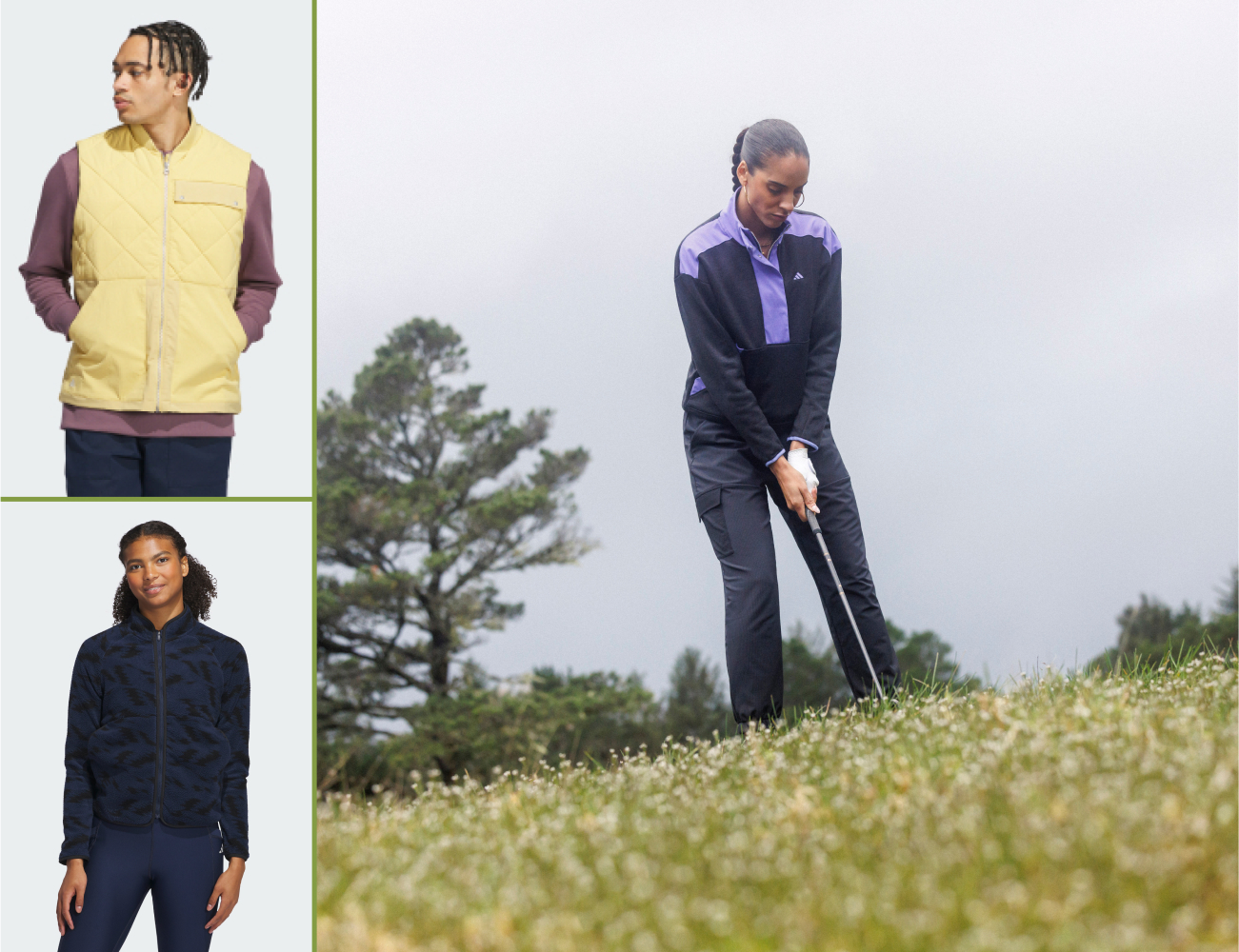
As you decide on what to wear golfing when it’s cold, weather and playing conditions can determine how heavy your outer layer needs to be; from pullovers and sweatshirts to full zip vests, there is a lot to choose from depending on the temperatures you’re facing. In some cases, players prefer to skip the base layer and stick with a polo shirt and a jacket as their protection from the cold.
Knit fabrics are often more breathable than others, while woven fabrics emphasize heat retention at the expense of breathability. Keeping this in mind, knits naturally stretch more and can be easier to play in. On the other hand, wovens will always stand up to the elements better than other fabrics. It’s also important to consider how easily you will be able to put on and take off your outer layer, depending on how your game progresses, as well as the weather.
Men’s:
- Go-to Quilted DWR Full Zip Vest
- Elevated Golf Sweatshirt
- Ultimate365 Quilted DWR Half Zip Pullover
- Ultimate365 Tour WIND.RDY Quarter Zip Pullover
- Go-to Quilted Pullover
- Ultimate365 Anorak
Women’s:
- Ultimate365 Printed Fleece Jacket
- Go-to Quarter Zip Jacket
- Provisional Jacket
- Go-to Quilted Jacket
- Ultimate365 Textured Jacket
Shoes and Accessories for Golfing in the Cold

Understanding how to dress warm for golf doesn’t stop at layering; wearing the right shoes is critical when playing golf, and this is especially true in adverse conditions. We recommend golf shoes with replaceable cleats and changing the spikes out before hitting the course; the ground is typically much harder and slicker in the wintertime and wearing a fresh set of spikes will improve your traction — reducing your risk of injury:
- Tour360 24 Golf Shoes (Men’s, Women’s)
- Superstar Golf Shoes
- S2G RAIN.RDY Golf Shoes
When the weather improves or is more bearable, the 3-Stripes also offers a range of timeless sneakers as spikeless golf shoes. Be sure to check out our piece on the advantages of both spikes and spikeless golf shoes as well.

Wearing breathable leather gloves is a given to make sure you have the best grip possible as part of what to wear golfing when it’s cold. You might also consider wearing thermal mittens between your shots to stay warm:
Finally, wearing headgear can help protect you from the sun and shield your eyes on the course, whether it’s a classic golf cap or a visor.
More Tips on Golfing in the Cold
Finally, as an overall tip for golfing in the cold, it’s important to stay moving and walk around the course as the weather dips into chilly temperatures; not only will it improve your blood flow and grip pressure, it will also help keep you in rhythm. Be sure to take the time to warm up with arm circles and lunges before your game or even in between holes for better injury prevention. Otherwise, you run the risk of losing dexterity in your hands.
Of course, all this starts with making sure you are adequately prepared with the right attire — and in doing so, you’ll be ready for any cold, windy, or rainy weather on the links.