


Regardless of whether you call it soccer, fútbol, or football one thing is for certain; what is known internationally as The Beautiful Game is full of intricacies. One of the often-times confusing yet vital rules of the game is the throw-in rule. In a game where the whole point is to use everything but your hands, it can be tricky to know what is and what is not allowed when it comes to the throw-in. So, to answer all your questions, we here at adidas have compiled everything you need to know about soccer throw-in rules, from rules to illegal throws — so you can focus on what’s important: dominating the pitch.
In this article we will cover:
- The soccer throw-in rule as a whole
- How a throw-in comes about during a match
- Who gets to perform the throw-in
- General rules during the throw-in
- What happens if a goal is scored during a throw-in
- Possible penalties and infractions during a throw-in
On top of all that, we will go more in depth on all the nuances of the throw-in and how it affects the game, so keep reading to get our full breakdown.
WHAT IS A THROW-IN?
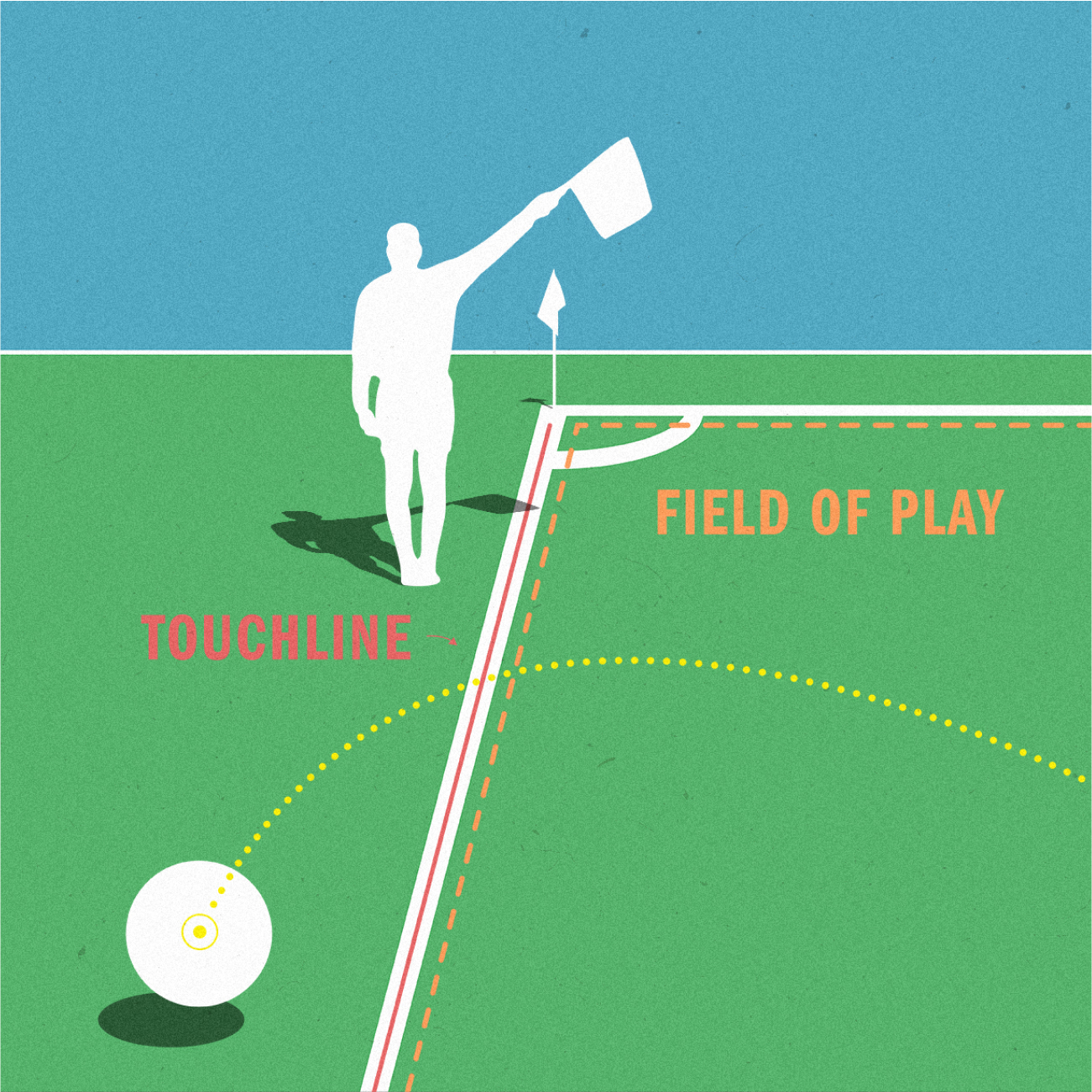
A soccer throw-in is a function of the game where the ball is placed back into play by a player throwing it in from beyond the touchline. Generally, it occurs when the whole ball crosses over the touchline after being kicked out by a player. By the way, the touchline is the boundary bordering the pitch and anything past it is considered out-of-bounds. Thus, a throw-in is awarded to the team opposing whoever touched the ball last.
Now that was a general overview, but if you really want to understand the mechanics behind the rule and how it effects the game, we’ll cover that next.
THROW-IN FUNDAMENTALS
A throw-in is brought about by a sideline referee signaling that the ball has fully crossed the touchline. This is usually signified by that sideline referee raising a flag. If play continues or players are to spread out to perform a throw-in, sometimes the on-field referee will step in and blow a whistle, stopping play to allow the throw-in.
Whenever a ball is kicked out by a player, usually the closest opposing player is chosen to do a throw in. In special circumstances, if an especially long or precise throw is required, sometimes a designated player will perform the throw-in.
While the throw-in is being attempted, players on the field will position themselves accordingly. These positions vary and are dependent on each teams’ strategy but generally a throw-in provides a chance to set up a scoring opportunity or defend it. If you want to brush up on the different positions in soccer, you can study up on them here.
SPECIAL THROW-IN RULES
Since the throw-in is a moment where players’ hands are allowed to put the ball into play, special rules apply:
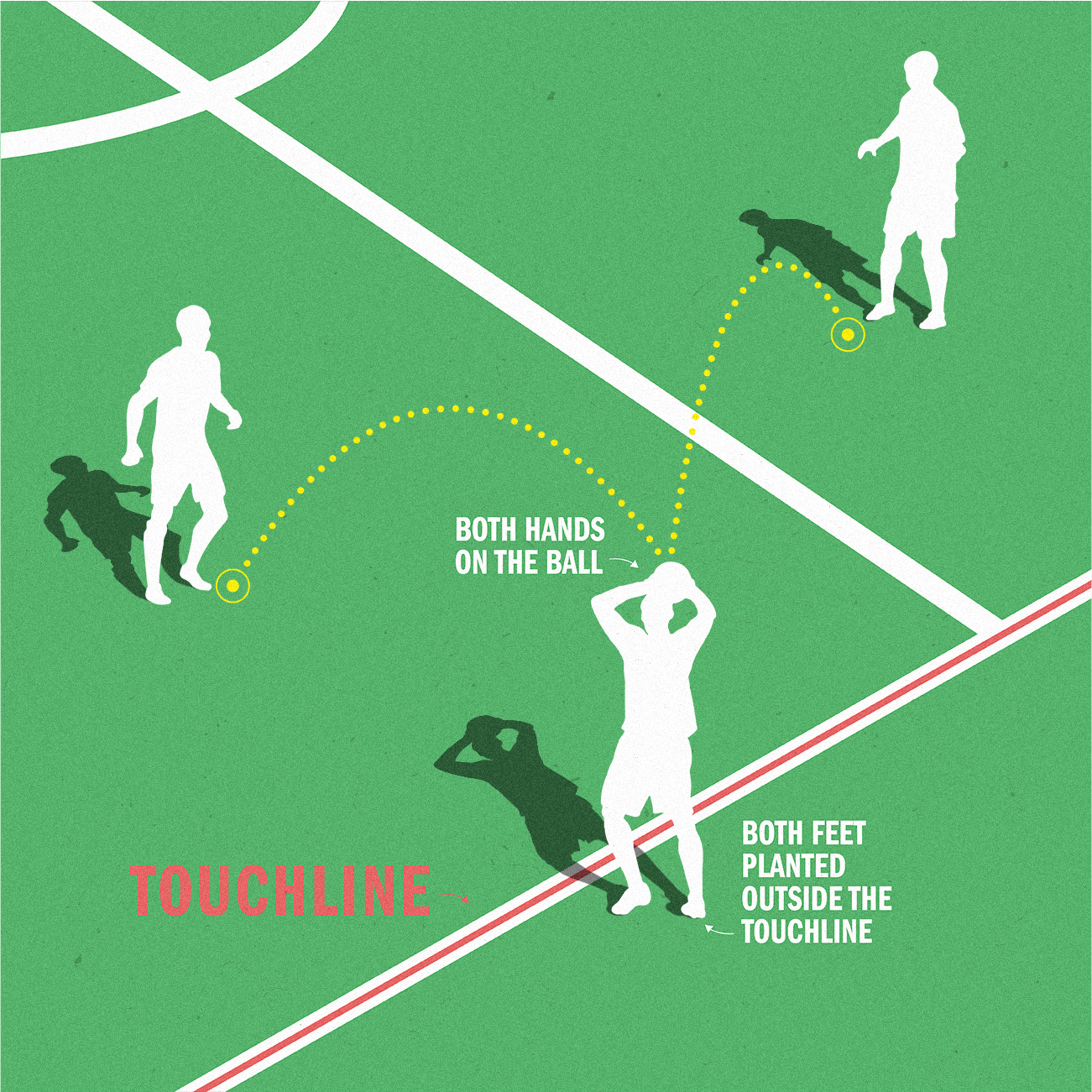
- When throwing a ball into play, the player must stand facing the field (sorry, no behind the backs allowed).
- The player must have both of their feet in contact with the ground when the ball is thrown, either on the touchline or the space outside the touchline (running starts are ok, but make sure to plant those feet!).
- The player must throw the ball using both hands over their head onto the field of play. If not, it is considered an illegal throw.
- After the ball is thrown, the thrower cannot touch the ball again until after it has been touched by another player from either team.
You may be wondering: “If I can throw the ball into play, why can’t I just throw the ball into the opponent’s goal?” This may be enticing; however, it is an illegal throw. The throw-in is meant to set up a scoring opportunity for your team in terms of positioning, not a tactic for an easy goal.
If the ball is thrown into the opposing goal, a goal kick for the opposite team will be awarded. In the same vein, if the ball is thrown into the throwing teams’ goal, then a corner kick is awarded.
While we’re on the subject of things to watch out for, what follows are some possible infractions that could happen during a throw-in.
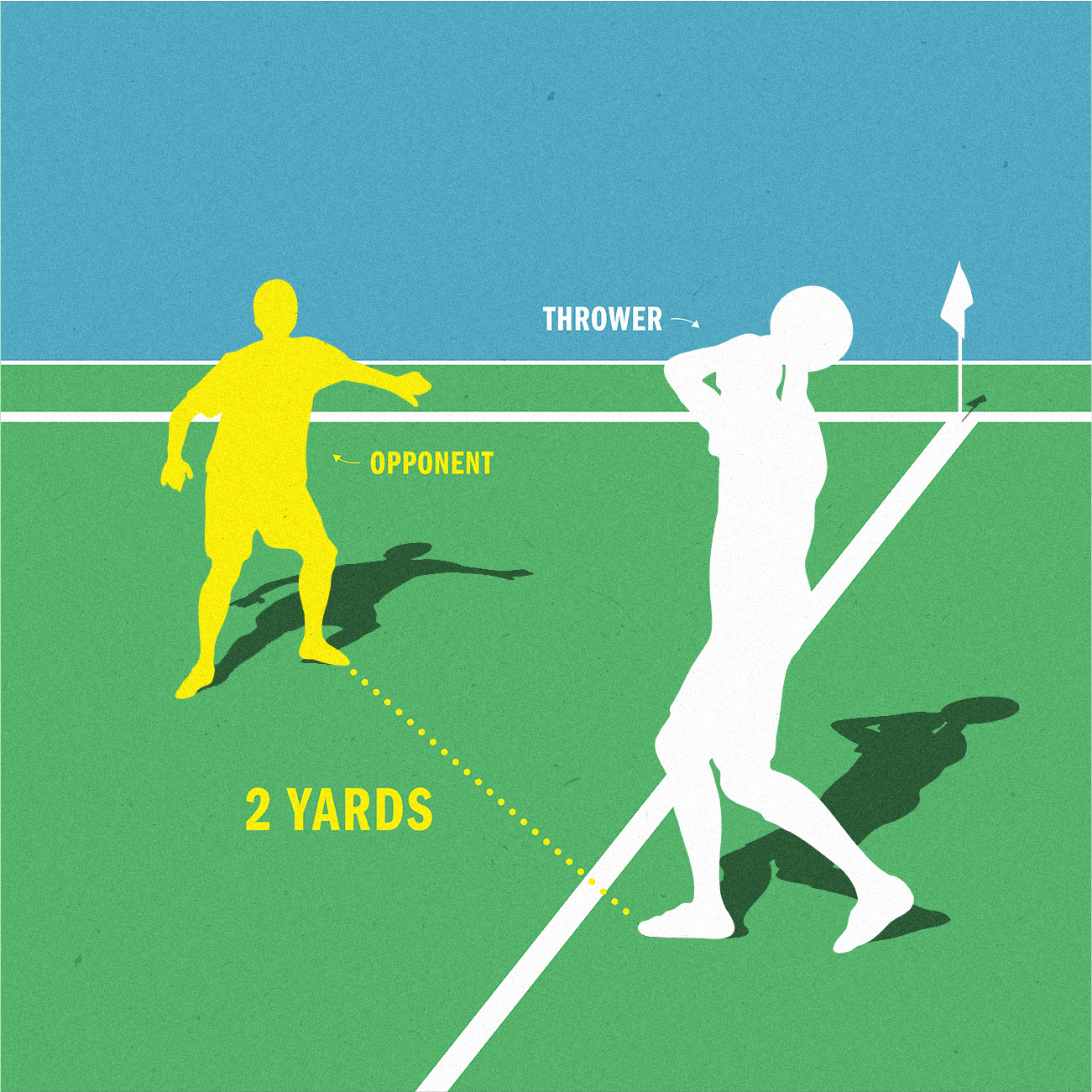
If you happen to be defending during a throw-in, be aware of the space between you and the thrower. Opponents must stand at least two yards away from the thrower when a throw-in is being performed. This is to avoid blocking the thrower’s view or their throw entirely. Interference with the throw in any way can earn a yellow card or a free kick if not careful.
If you are a goalkeeper, keep in mind that you cannot catch a throw-in from your team. This is known as a ‘back-pass’ and is an illegal throw in soccer. And if you are the thrower, you cannot touch the ball again until it has touched another player. This rule is in place to prevent players from just throwing the ball to themselves.
Like we said earlier, soccer is a game full of rules and the throw-in is just one of them. The throw-in has a lot of ins and outs to understand, but often it can be the catalyst for a play. As you take the pitch in the future, gear up, remember these rules, and always be ready for a throw-in. Stay confident, you got this.