


Without proper care in your approach, it can be easy to run into common gym injuries while exercising; there are pitfalls that anyone can encounter while lifting weights, running on the treadmill, hitting a punching bag or even just stretching. Neglecting to warm up or hydrate can be dangerous, too — and occasionally, a workout injury can even have serious consequences.
Time and time again, this serves as a good reminder that safety is, by far, the top priority for preventing sports injuries — more important than how many hours you put in, how many reps you take on, or how quickly you do them.
HOW TO AVOID GYM INJURIES
This guide will outline how to avoid workout injuries, as well as some injury prevention exercises. Ultimately, it is possible to stay dedicated to a specific sport or exercise routine for years — or even decades — but it requires adjustments and reassessments.
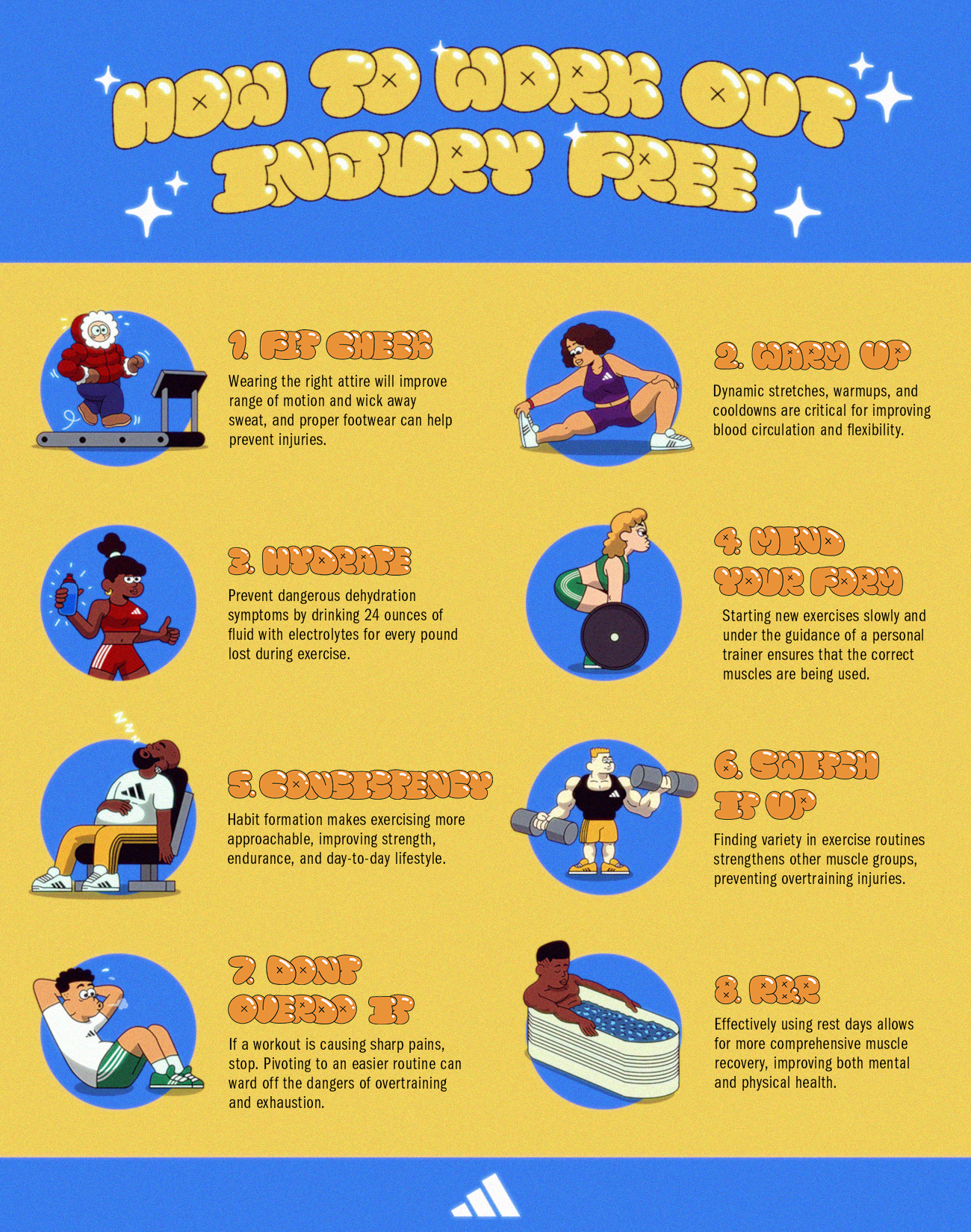
1. FIT CHECK: GEAR UP
If you’re going to exercise, you should wear adequate clothing; the right attire and accessories will help you perform your best and prevent gym injuries. While shorts and tank tops allow more range of motion during high-intensity cardio sessions or workouts in hot weather, you may find leggings, tights, and workout tees a better fit for yoga and weightlifting because of their moisture-wicking fabric.
If boxing is part of your workout, make sure to wear hand wraps and gloves; they stabilize your wrists, protect your knuckles, and reduce the risk of common injuries like sprains and fractures.
It’s important to consider footwear, too; among the best injury prevention tips is that a pair of proper strength training shoes will provide stability and grip for lifting weights, along with helping you maintain proper form. If you’re using a treadmill or going out for a run, the right running shoes are crucial for staying comfortable and preventing shin splints, as well as sports injuries to the foot, knee and ankle. We’ve written a helpful guide on shoes you should wear to the gym; there are plenty to choose from.
2. WARM UP — AND TAKE YOUR TIME
Dynamic stretches, warmups, and cooldowns are great injury prevention exercises, often just as critical to your health as the workout itself; they improve blood circulation, flexibility, and range of motion while mitigating muscle soreness and helping reduce the risk of common gym injuries.
There are long-term risks of regularly skipping warmups, too: joint pain, knee injuries, muscle damage, and losing range of motion among them. In most cases, a 10 to 15-minute warmup should be enough — and if you’re looking for a routine, we have an in-depth guide on how to warm up before a workout, as well as a guide for cool down stretches for after a workout.
Daily stretching and mobility exercises are key to understanding how to avoid workout injuries; they can keep your muscles feeling flexible and your joints strong. Runners need to make sure their legs and knees are properly rested between runs — otherwise, they can risk getting muscle cramps, heavy legs, and weakened joints.
3. REMEMBER TO HYDRATE
Staying hydrated is another part of exercising that is absolutely essential, but it’s one that can be easy to neglect if you are caught up in the ebbs and flows of working out. A variety of symptoms can arise from dehydration, including thirst, dry mouth, eye twitching and especially muscle cramps. In extreme cases, it can have fever-like characteristics like confusion, dizziness, fatigue, constipation, and heat stroke — all of which can be extremely dangerous.
A good rule of thumb is to drink around 16 to 32 ounces of fluid with electrolytes every half hour to one hour while exercising, as well as consuming energy gels with protein. Within an hour of finishing your workout, it’s advised to drink 24 ounces of fluid for every pound lost during exercise. Protein shakes can also be very beneficial, although your daily protein intake is a more important factor to consider.
4. MIND YOUR FORM
It's always exciting to find a brand-new exercise or stretch for your routine, but you should never jump right in and start pumping out reps; doing so without proper form is one of the easiest ways to run into a serious workout injury. Ideally, you should always have a partner spot you or consult a personal trainer when attempting a new exercise — and even then, you should always perform it slowly first. If you’re lifting, only start with a comfortable amount of weight; consider attempting with only bodyweight first, if the specific exercise allows.
For example, using improper form when attempting weightlifting exercises like deadlifts can lead to rotator cuff or shoulder injuries, or even spinal injuries that could last several years. What’s more, performing certain yoga stretches incorrectly can cause nerve damage, sprains, dislocations, muscle strains, and more. So, as eager as you might be to test out a new exercise, always prioritize taking time to make sure your form is correct first.
5. CONSISTENCY COUNTS
Between managing work and life commitments, it can be difficult to even find the time for exercise during the week. It can be equally tempting to sit it out for a day (or two) and just relax. But the reality is that you make the most progress by staying consistent, and that can often mean just being flexible with the length of your workout routine to fit it into your schedule.
Consistency is another critical part of understanding how to avoid workout injuries, as it has both mental and physical benefits that pay off in the long run. Habit formation makes the entire process more approachable and less intimidating — and you’ll eventually find that as you become more familiar with your routines, you’re able to finish them more efficiently and in less time. You’ll also find that your body will gradually adapt to the changes, improving your endurance and strength, making it easier to overcome plateaus and avoid gym injuries.
Not every workout has to be a serious test of strength, and not every run has to be an epic marathon. If you can spare only thirty minutes or less in the gym or at home, focus on the two or three exercises you can do well while allowing enough time to warm up and cool down. In any case, it’s often better than sitting it out completely — especially if you’re just starting out and trying to establish your routine.
6. SWITCH IT UP
Finding variety in your exercise routines is key to keeping the process fun and interesting, rather than feeling like a chore or something you can phone in. It also prevents you from hitting plateaus and running into an overtraining injury by strengthening other muscle groups on different days.
If you’re a weightlifter, try consulting with a personal trainer about new exercises, or even have a partner spot you. If you’re a runner, try out a new route — or, if you’re on a treadmill, a different pace or incline. Eventually, you will build up a cache of exercise routines that are varied enough to revisit from time to time.
7. LISTEN TO YOUR BODY: DON’T OVERDO IT
One aspect of exercising that the “no pain, no gain” mindset overlooks is the importance of knowing when to take a rest. Simply put: if it hurts, stop — especially if you’re experiencing sharp pain. Ignoring it or trying to push through could lead to serious gym injuries, and overtraining is a fast-track to burnout — leading to diminishing returns and exhaustion. Overtraining can also cause midday fatigue, excessive soreness, and muscle cramps.
Instead, focus on being flexible with your workouts depending on how you feel during the day — pivoting to a shorter or easier routine if need be. While it is true that your mindset often changes for the better as you start an exercise, there are times that your body is literally trying to tell you to dial it back. Always remember to start slow, know your own threshold, and listen for signals that your body is trying to communicate.
8. R&R, ALWAYS
If you find yourself feeling fatigued, sore, or tired in the middle of the workday due to overtraining or lack of sleep, it’s a sign that you should be better using your days off; rest days are when the benefits of exercising take effect, allowing time for muscle recovery, healing, and growth. It’s also when your body replenishes glycogen to fuel your next workout. As with listening to your body, effectively using your rest days can help you sleep better and prevent a workout injury.
Rest days are also a good opportunity to replenish those glycogen levels by eating complex carbs, staying hydrated, and eating foods that support recovery, like fruits and vegetables. Yoga is another popular pastime, improving your flexibility, breathing, and overall peace of mind.
STAY SAFE FROM GYM INJURIES
The best way to avoid common gym injuries is to prioritize your safety — and, more than anything else, to listen to your body. As a baseline, just remember to wear the right clothing, warm up, start slow, hydrate, and consult with personal trainers or gym partners if you need insights. The right injury prevention exercises and approach to your workout regimen will allow you to stay active for years to come, staying flexible and adapting to your capabilities and thresholds.
Frequently Asked Questions About Gym Injuries
What is the most common injury at the gym?
Among the most common injuries at the gym are sprains in the wrist, ankle, and lower back, as well as rotator cuff and elbow injuries, like tennis elbow or golfer’s elbow. Runners can often encounter shin splints and Achilles tendonitis as a result of overtraining, or even ankle sprains from landing your foot incorrectly.
However, whether you’re lifting weights or running, knee injuries are prevalent and even inevitable if you aren’t prioritizing safety during your workouts — and they’re often the biggest obstacle one might face when trying to establish an exercise regimen.
How can you prevent injuries?
The best injury prevention tips are to always warm up, start slow, make sure you are using proper form, hydrate, and take rest days. However, above all, you should simply listen to your body; if you are experiencing sharp pains, stop exercising immediately and rest. Ultimately, your safety and wellbeing are more important than anything else.
Illustrations by Bryson Williams