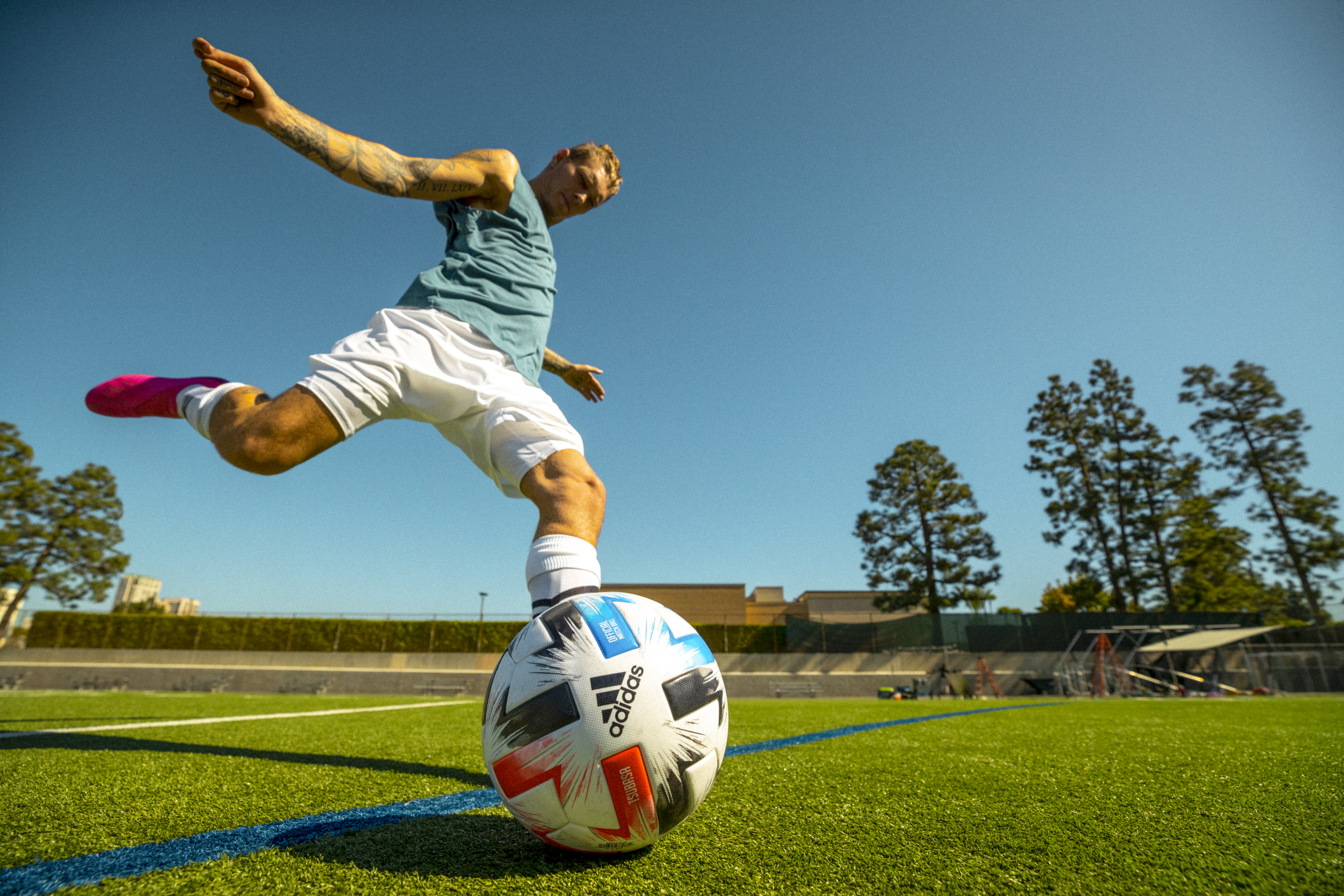
Kicking a soccer ball may seem simple, but there's more to it than meets the eye. If you’re eager to learn how to properly kick a soccer ball, it all comes down to understanding a few key basics. Planting your non-kicking foot in the right spot, locking your ankle, and keeping your body balanced will help you strike the ball accurately, whether you’re passing to a teammate or booting the ball down the pitch.
Once you’ve got passing down and can send the ball where you want it, it’s time to level up with our guide on how to shoot a soccer ball and start scoring goals.
What Types of Kick Are There?
Believe it or not, there are lots of different ways to pass, and each has an important use on the pitch. If you’re learning how to kick a soccer ball, the first step is to understand the three core techniques used in most in-game situations:
Inside kick (for accuracy)
Kicking with the inside of your foot is used for short, controlled passes and is the most accurate technique. This kick is ideal when you need precision to keep possession or pass to teammates in tight spaces.
Laces kick (for power)
The laces kick gives the ball strength and distance. If you’re learning how to kick a soccer ball hard or how to kick a soccer ball with power, this is the technique used for shooting or long passes down the pitch.
Chip kick (to lift the ball)
The chip kick is used to lift the ball over defenders or a goalkeeper. It’s useful in attacking situations where a grounded pass or shot isn’t possible.
How To Kick A Soccer Ball: A Step-By-Step Guide
Now that you know the different types of kicks, let’s break down the steps for how to kick the ball effectively. By focusing on technique rather than just power, you’ll improve accuracy, consistency and overall control of the ball.
1. Plant Your Non-Kicking Foot
Place your non-kicking foot beside the ball, with your toes pointing toward your target. It should be positioned around 4-6 inches away to provide you with balance and control as you strike.
2. Lock Your Ankle
Keep your kicking ankle sturdy and locked in place. A strong ankle creates a solid surface to strike the ball, helping generate control and power.
3. Choose Your Contact Point
Where you strike the ball determines the outcome:
- Use the inside of your foot for short, accurate passes
- Use the front of your foot (laces) for powerful shots and long kicks
- For chip kicks, strike the bottom-center of the ball using the tip of your laces
4. Get Your Body Position Right
Make sure to lean slightly over the ball as you kick. This helps keep the ball low and controlled, rather than lifting too high and losing accuracy.
5. Use Your Eyes
Focus on your target first, then look at the ball, specifically the spot you want to strike, just before making contact. This coordination improves precision and timing.
6. Follow Through
After kicking the ball, continue your leg movement toward your target. A full follow-through adds power and ensures your shot or pass goes exactly where you want it to, whether it’s to a teammate or to the back of the net.
How to Kick a Soccer Ball with Power
Whether you’re taking a long shot from outside the box or a free kick, generating strong, controlled force on the ball is an important skill. When learning how to kick a soccer ball with power, it’s tempting to just swing your leg as hard as possible. But true power comes from good technique and proper body positioning. When done well, even a less forceful strike can generate a huge amount of force and speed.
- Strike the ball with your laces: The key to powerful shots is hitting the ball with your laces. This part of your foot provides a firm, flat surface, allowing you to transfer maximum energy into the ball. To support this, keep your toes pointed down and your ankle locked, so you get a solid connection at impact.
- Run up to the ball: A smooth run-up also plays an important role. Approaching the ball in a straight line helps align your body with the target and allows you to generate forward momentum. As you strike, engage your hips and core. Most of your power comes from this rotation, not just your leg swing.
- Use the rest of your body to help: Balance is just as important as how hard you kick. Use your opposite arm (the side not kicking) to stabilize your body as you move through the shot. This helps maintain control and prevents you from leaning off target.
If you want to kick a soccer ball harder, it’s more about timing and technique than just power. A well-thought-out strike with good form will always beat trying to smash it without control.
Drills to Improve Your Kicking Technique
As with any skill, improving how to kick a soccer ball consistently comes down to one major thing: practice. Adding simple drills into your routine will help build accuracy, power, and confidence over time. Aim to train 3-5 times per week for the best results.
- Wall passing drill: Stand a few meters from a wall and pass the ball against it using the inside of your foot. Focus on clean contact and control as the ball returns. This helps sharpen precision and first touch.
- Target corner shooting drill: Set up targets in the corners of a goal and practice striking with your laces. This drill improves your ability to combine power with accuracy, rather than just hitting the ball hard.
- Both-feet repetition drill: Alternate between your dominant and weaker foot when passing or shooting. Developing both feet makes you more unpredictable and effective in game situations.
- Gradual distance progression: Start with short passes, then gradually increase the distance between you and your teammate. This builds technique first, then adds power as your confidence improves.
To take your skills further, combine these drills with soccer passing drills and soccer agility drills to help you on your journey to becoming the best player on the pitch.
Common Mistakes When Kicking a Soccer Ball
Even when you understand how to kick a soccer ball, small errors can affect your technique and results.
- Leaning too far back: One of the most common mistakes is leaning back too far, which causes the ball to lift and lose control.
- Not locking your ankle: A floppy ankle can lead to weak or inconsistent strikes, while hitting the wrong part of your foot reduces both accuracy and power.
- Poor plant foot positioning: Placing your non-kicking foot too close or too far away can throw off your balance and direction. Ignoring your follow-through can also reduce both power and accuracy.
Fixing these simple issues can quickly improve how you kick the ball.
Mastering Your Soccer Kick
Perfecting how to kick a soccer ball comes down to consistency and attention to detail. Real power and accuracy come from taking the time to develop your technique, not just kicking harder. By focusing on important things like foot placement, ankle control, and body position, you’ll see steady improvement over time.
Even small adjustments can make a big difference in how to properly kick a soccer ball, helping you strike cleaner and more confidently. Pairing strong technique with the right gear, like the PRED 94 Elite Firm Ground Cleats made for traction and stability on dry grass, can further improve your performance.
adidas F50 soccer cleats are ideal for precision and balance, allowing you to maintain close control and stability even at high speeds. Whether you’re a beginner, training or a seasoned pro, these cleats are perfect for getting solid contact with the ball, no matter what position you play.
For younger players, something like the Predator League Fold-Over Tongue Firm Ground Soccer Cleats with Nanostrike tech for precision striking gives you a lightweight feel and a solid grip, helping to achieve a super clean kick.
With regular practice, your technique will become second nature, allowing you to perform under pressure.