


If you take away one thing from this article, let it be this: you are the boss of your own body. Trends in the health and wellness space come and go, and as of late, cycle syncing workouts have been popping to the top of everyone’s social feeds. Some people praise it as the holy grail of holistic health, while others sniff out the science and are more skeptical. Over the course of one menstrual cycle, women experience vast fluctuations in hormones, causing us to feel different day to day—so to cater to these changes, should you sync your workouts to your menstrual cycle? We spoke with Dr. Michelle Sang, M.D., OB/GYN, and Abbey Sharp, Registered Dietician, about what cycle syncing is and if the method has any merit.
What Is Cycle Syncing?
Cycle syncing is when you align your nutrition and your workout intensity with your current menstrual cycle phase. Instead of doing the same workout every day, the cycle syncing method accounts for how you’re feeling and recommends that you choose a workout and meal that feels right for your body at that time.
“Generally speaking, a woman's cycle has a predictable pattern of phases, and there are predictable hormone shifts that take place that can impact our energy, our nutrient needs, our cravings, and our mindset,” said Sharp. When practicing cycle syncing, Sharp described it as “changing your overall habits, including diet and exercise routine to match or adjust to the different phases of your cycle.”
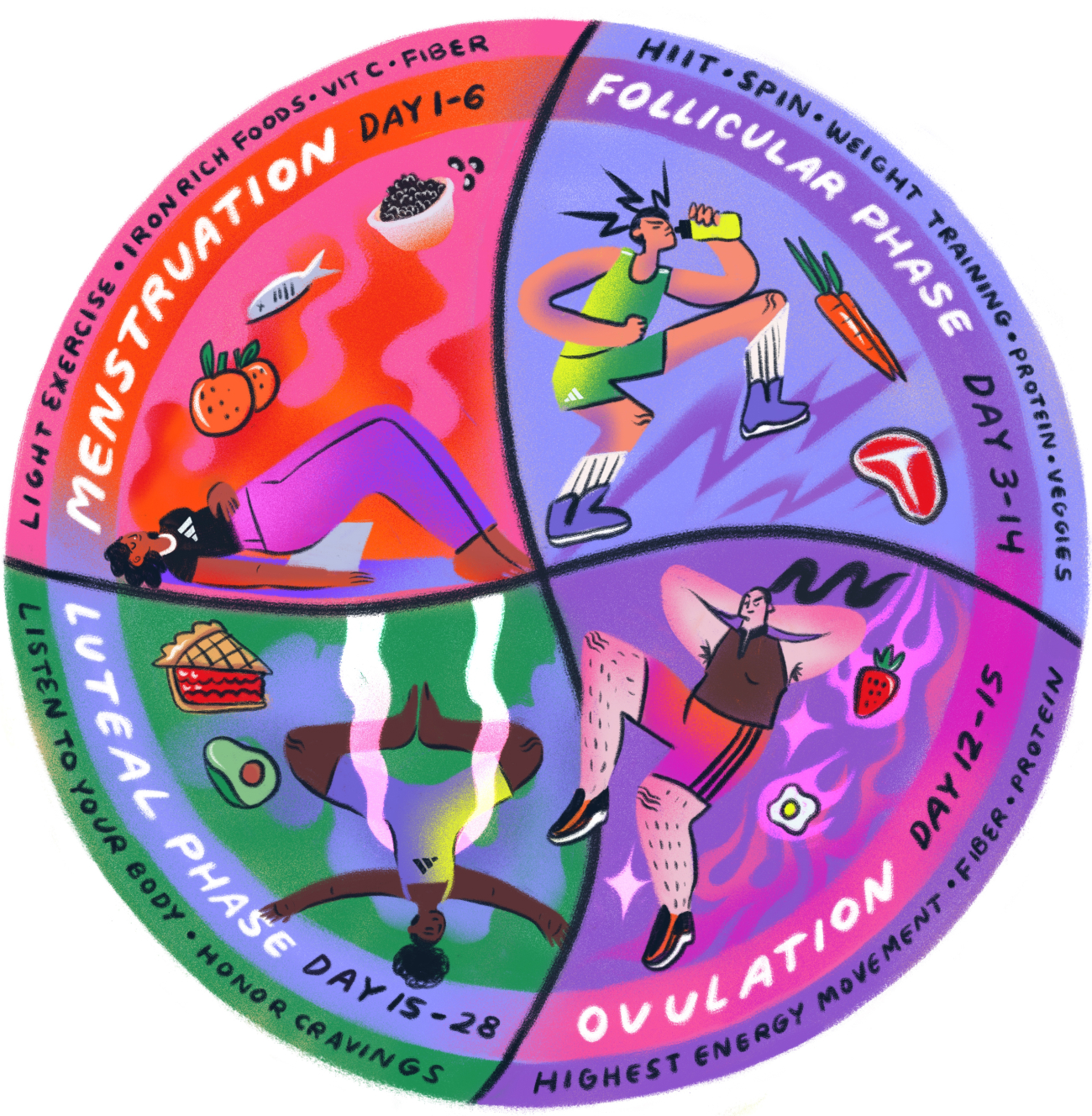
Benefits of Cycle Syncing
Cycle syncing encourages you to tune in with your body and learn what foods and workouts your body responds well to.
“It just helps people become more aware of collecting data on how foods and exercises make them feel. And how they feel at different times of the month and how they can make little adjustments to help themselves feel a little bit better and more energized,” said Sharp. However, she doesn’t want people stressing over the phases of their cycle and the recommendations that cycle syncing may encourage.
Cycle syncing is a fun way to learn more about your body, but it may not feel right for everyone. This is not medical advice, and you should always talk to your doctor or a registered dietician about what is right for you.
What Are The Menstrual Cycle Phases?
Scientifically, your menstrual cycle is divided into two phases; follicular and luteal. However, for the topic of cycle syncing, we’re breaking them down into four phases (menstruation, follicular phase, ovulation, and luteal phase) because your body will feel different at each point.
The average cycle is often represented as lasting 28 days, but it could be between 21 and 35 days, and even cycle to cycle can be different durations. The day ranges listed below are guides, and we recommend tracking your cycle to get to know your body’s unique schedule.

Menstruation: Day 1-6ish
The first day of bleeding is the first day of a new cycle. Menstruation can last anywhere from two to seven days, with bleeding tapering off towards the end. During menstruation, most people feel crampy, tired, and bloated, especially during the first day or two of bleeding.
Biology Tip: Many have a love/hate relationship with their period, but having a regular period is a sign of great health. If you are naturally tracking your cycle and your period is highly irregular, this could be an opportunity to talk with your healthcare provider as to why there are inconsistencies in your cycle.
A guide for movement:
- Walking
- Yoga
- Pilates
Menstruation can have a big effect on how we feel, so should you work out differently on your period? We say listen to your body and do what feels right. If cramps are hitting hard or you’re feeling extra tired, then take it easy with a walk, some light yoga or Pilates. Your entire period likely won’t feel the same either. Maybe days one and two call for taking it easy, but by day three your estrogen will begin to rise, giving you more energy to tackle whatever workout you love.
A guide for nutrition:
- Iron-rich foods like red meat, poultry, fish, tofu, beans, lentils, and legumes.
- Sources of Vitamin C like citrus fruits, bell peppers, tomatoes, and leafy greens.
- Fiber and water-dense foods like fruits, veggies and whole grains to help ease bloating.
- Reduce caffeine intake.
During menstruation, iron-rich foods are your friend, said Sharp. “Focus on iron-rich foods, that's going to help compensate for a little bit of the blood loss. Pairing iron-rich foods with sources of vitamin C helps to increase iron absorption,” said Sharp.
To add to the menstrual fun, Sharp also hinted that taking a break from coffee can actually do you good. “I recommend going decaf—as hard as this may be. It is a good time to ease back because coffee and caffeinated teas during those first few days of menstruation can interfere with the iron absorption and also can actually worsen period cramps,” said Sharp.
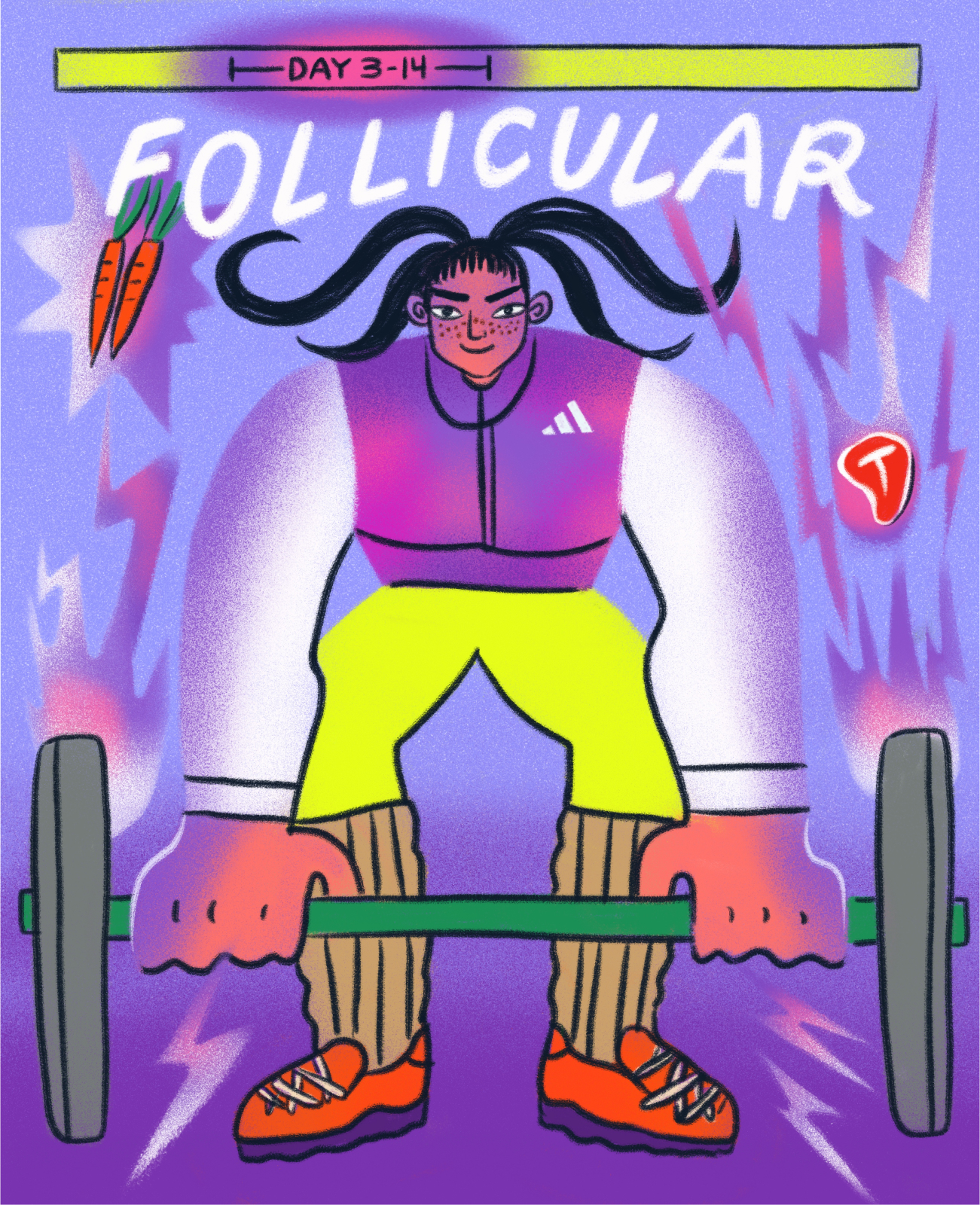
Follicular Phase: Day 3-14ish
The follicular phase technically starts on day one with menstruation, and lasts through ovulation, but many people don’t feel the same during the bulk of their follicular phase as their period, which is why we’ve separated it out for cycle syncing purposes. Around day three, estrogen starts to rise, making you feel more energetic. The follicular phase lasts until ovulation occurs. During these days leading up to ovulation, you’ll likely feel strong and creative.
Biology Tip: “The follicular phase’s number of days varies the most from woman to woman. It's what really changes the duration of their total cycle from the beginning of one period to the beginning of the next period,” said Dr. Sang.
A guide for movement:
- HIIT
- Weight training
- Spin class
As you start to feel more energy and less crampy as your period ends, explore higher-intensity workouts that will put that optimal energy into action.
A guide for nutrition:
- Cruciferous vegetables like broccoli, kale and bok choy.
- Protein like chicken, beef, tofu, or beans.
- Healthy fats like salmon, avocado, and nuts.
- Use your optimal energy to batch prep healthy meals for the week.
“Put that increased energy to good use by batch prepping healthy meals for the rest of the week, like prepping veggies, cooking proteins, and making freezable meals,” said Sharp.

Ovulation: Day 12-15ish
Ovulation happens around the last day of the follicular phase. “The ovulatory phase is when you have a surge of FSH, luteinizing and estrogen hormones to trigger the release of the ripe egg from the ovarian follicle. It lasts about 24 hours, and that is the time when the egg would be fertilized,” said Dr. Sang. During ovulation, you’ll be feeling at your best, and you might feel energetic, strong, highly creative and organized.
Biology Tip: Did you know your body gives you clues when you’re ovulating? Around this time, you may experience slippery cervical fluid, a higher libido, and breast tenderness. Tracking your cycle naturally can help you identify these signals so you can either avoid or attempt pregnancy.
A guide for movement:
- Kickboxing
- Running
- Rowing
- Strength training
The exercises you’ve been doing throughout the follicular phase will likely still feel good during ovulation. If you’re feeling that extra burst of energy and power, then this is a great time to really push yourself during your workouts to get even stronger.
A guide for nutrition:
- Sources of fiber like whole grains, beans, and fruit.
- Sources of protein like fish, tofu and chicken.

Luteal Phase: Day 15-28ish
After ovulation ends, estrogen drops and progesterone increases, signaling the beginning of the luteal phase. Progesterone causes an increase in basal body temperature, and can also increase your metabolism, making you hungrier in this phase. Towards the end of the luteal phase as menstruation is about to begin, you might start feeling more lethargic and experiencing PMS symptoms.
Biology Tip: “The luteal phase, if it's normal, is 14 days and that's pretty consistent for most women,” said Dr. Sang. A luteal phase that’s 12 days or shorter can signal a deficiency, which is why tracking your cycle can help you stay in tune with your health.
A guide for movement:
- Listen to your body and move in a way that brings you joy.
“If some of those PMS symptoms start to creep in, we know that exercise can help to boost serotonin and make us feel a little better. So I say choose exercise that makes you feel good. If you're feeling a little fatigued, maybe you're not going to be up for a full-out HIIT class. But this could be a time for a fun dance class, or if you're into running, that's a great option as well. Listen to your body, this is really the time to choose something that brings you joy,” said Sharp.
A guide for nutrition
- Honor food cravings, but pair them with high-fiber carbs like overnight oats, seed bread, and sweet potatoes, along with protein and fats.
- Water-rich foods like fruits and vegetables.
- Avoid or reduce reliance on highly processed, highly salted foods to avoid uncomfortable bloating as you approach menstruation.
“The interesting thing about the luteal phase is our metabolism is actually slightly higher. I say honor food cravings, because these are scientifically proven, and they're linked to the amount of leptin and estrogen that is in our blood during this phase. So try to pair whatever it is that you're craving with a source of fiber and protein that's going to help you balance that meal,” said Sharp.
Cycle Syncing: Is It Worth It?
After speaking with Dr. Sang and Sharp, it became clear that cycle syncing is still very much in the beginning stages of research. Dr. Sang brought up that if you're on hormonal contraceptives, your natural cycle is altered so you will not experience these fluctuations between phases. If you’re curious about tracking your cycle naturally, Dr. Sang recommends researching fertility awareness methods and using a cycle tracking app like Read Your Body or Euki.
Even with a natural cycle, there are lots of factors that can impact how you may be feeling. “We have to take into account how much stress we have, how much sleep we're getting, etc. I think a lot of times we like to make it simple, but we're so complex and that's the beauty—and also the challenge—of being a woman,” said Dr. Sang.
As for cycle syncing nutrition, Sharp mentioned it’s always a good idea to prioritize sources of protein, veggies, complex carbs, and fats as part of a well-rounded diet. She likes the idea of cycle syncing as a guide for getting more in tune with your body’s cravings.
“I don't want anyone following a menstrual cycle diet to a ‘T’, but it just gives some helpful reminders of what's usually happening in your body, and why we may feel the way we do. There's nothing wrong with us when we have food cravings—it's natural based on what our body goes through every month to produce an egg, and that's just the beauty of being a woman,” said Sharp.
If you’re open to reconnecting with your body, give cycle syncing a try and form your own opinion on it. Remember, your body is always speaking to you so tune in and make sure you’re listening to what it’s saying.
Illustrations by Ashley Lukashevsky