

Indoor soccer is a variation of traditional soccer that is played—you guessed it—indoors, either with or without walls. Interestingly, the only regulated variation of indoor soccer is Futsal; for the most part, indoor soccer rules are created by the players themselves or tournament organizers. This means the rules can vary greatly, depending on factors like field size and the players’ age and expertise.
One of the most exciting indoor soccer formats, and the one we will focus on in this article, is 6-a-side played on turf with surrounding walls. When it comes to Futsal vs indoor soccer, there are some similarities but also differences, most notably that Futsal is played on a hard court without walls and with only five players per team on the field at a time.
Ready to learn the basics of 6-a-side indoor soccer? Keep reading to discover what makes the sport unique, brush up on common indoor soccer rules, and learn how you can transfer your current soccer skills and gear.
THE UNIQUENESS OF INDOOR SOCCER
The objective of the 6-a-side indoor soccer game, like all soccer variations, is to score goals. However, from there it varies significantly in format and play style from other game formats. While traditional soccer focuses on the strategic positioning and teamwork of its 11 players per team, 6-a-side focuses on quick passes, agility, and constant movement.
Both types share the same soccer player position names but the formations on the field change, making indoor soccer a faster and more offensive game. For example, the most common traditional soccer formation is called 4-3-3, which means: 4 defenders, 3 mid-fielders, and 3 forwards, plus the goalkeeper. The most common formation for indoor soccer is 2-2-1: 2 defenders, 2 mid-fielders and 1 forward, plus the goalkeeper. For indoor soccer, forwards and midfielders are creative positions that constantly score due to high skill level, while the defenders hold and start the plays. This playstyle makes indoor soccer a more offensive sport.
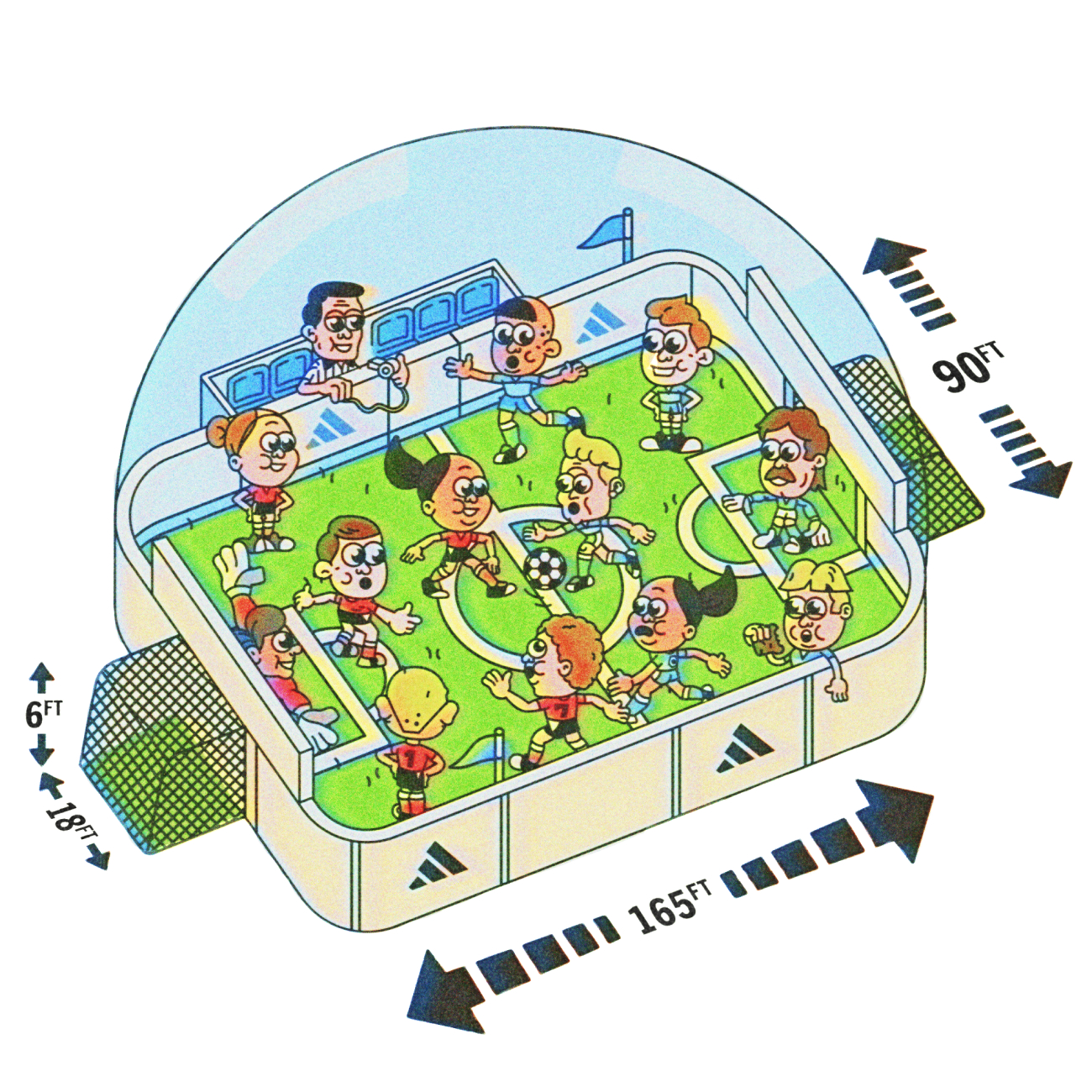
The tactics and skills required for indoor soccer diverge from that of traditional soccer due to the smaller space that players are moving in. The average indoor soccer field size is 165 feet long by 90 feet wide and the indoor soccer goal size is 6 feet by 18 feet—as compared to the average 340 ft long by 70 ft wide and the 8 ft by 24 ft goal size. In 6-a-side game, it is harder to maintain possession of the ball for long periods as one must act quickly to pass and prevent defenders from intercepting the ball. In traditional soccer, it is common for a player to hold the ball for longer periods and to transport it over longer distances.
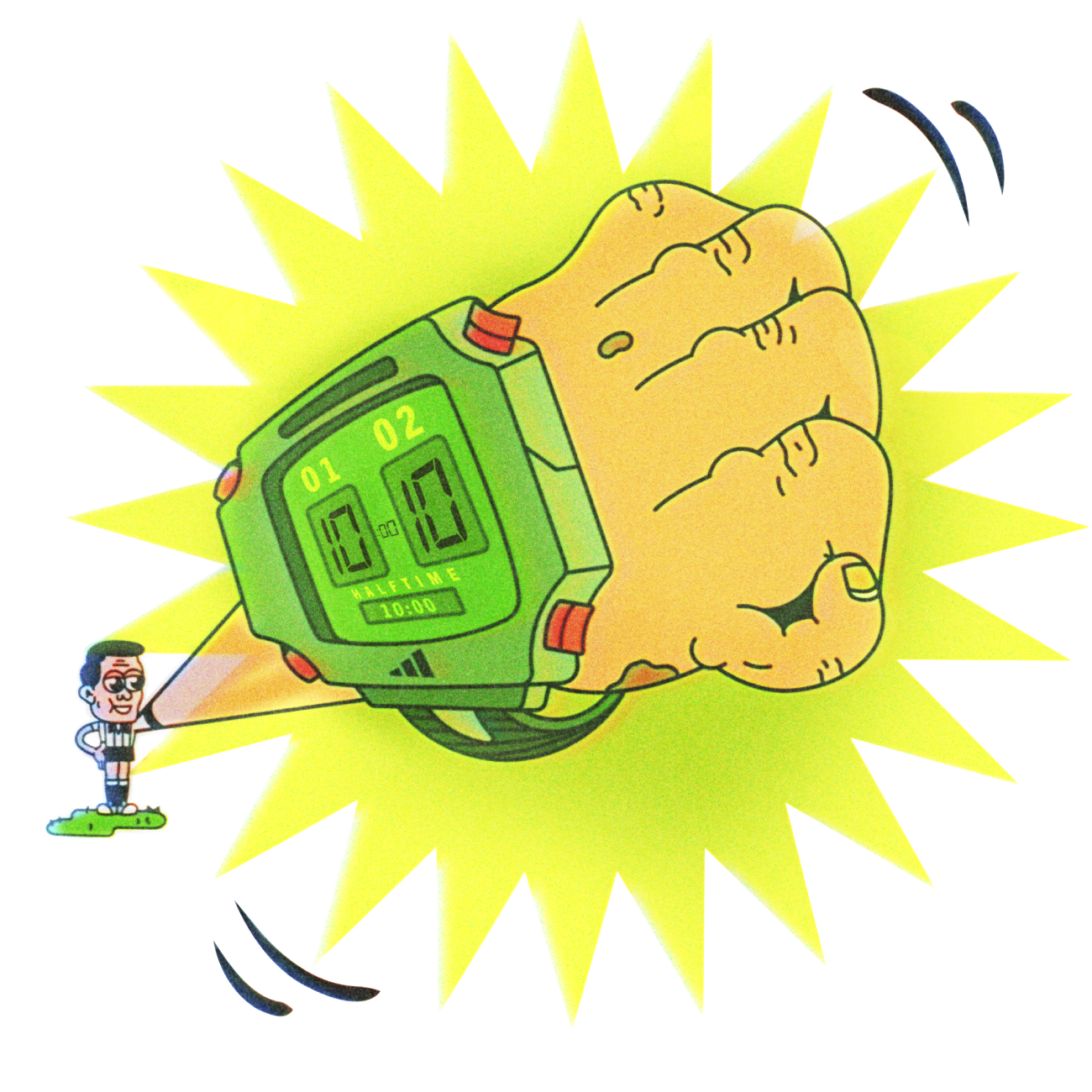
Additionally, you’ll see shorter game times for indoor soccer, most commonly featuring two halves of approximately 20 minutes with a 7 to 10-minute half time, which gives it a faster pace. As these are shorter games, it is common to see players participate in more than two games per day. One component of a shorter game is that players are able to be more explosive and generate more plays that can lead to more goals than traditional soccer.
THE HARD AND FAST RULES
Now that you know the basics of what sets 6-a-side apart, let’s get into the nitty-gritty. In stark contrast to traditional soccer, indoor soccer rules allow unlimited substitutions that can be spontaneous, except for the goalkeeper who must wait until the game is paused after a goal or other stoppage of play like when the ball touches the ceiling. By the way, since there are walls surrounding the field, the only out-of-bounds happens is when the ball touches the ceiling or anything above the height of the walls.
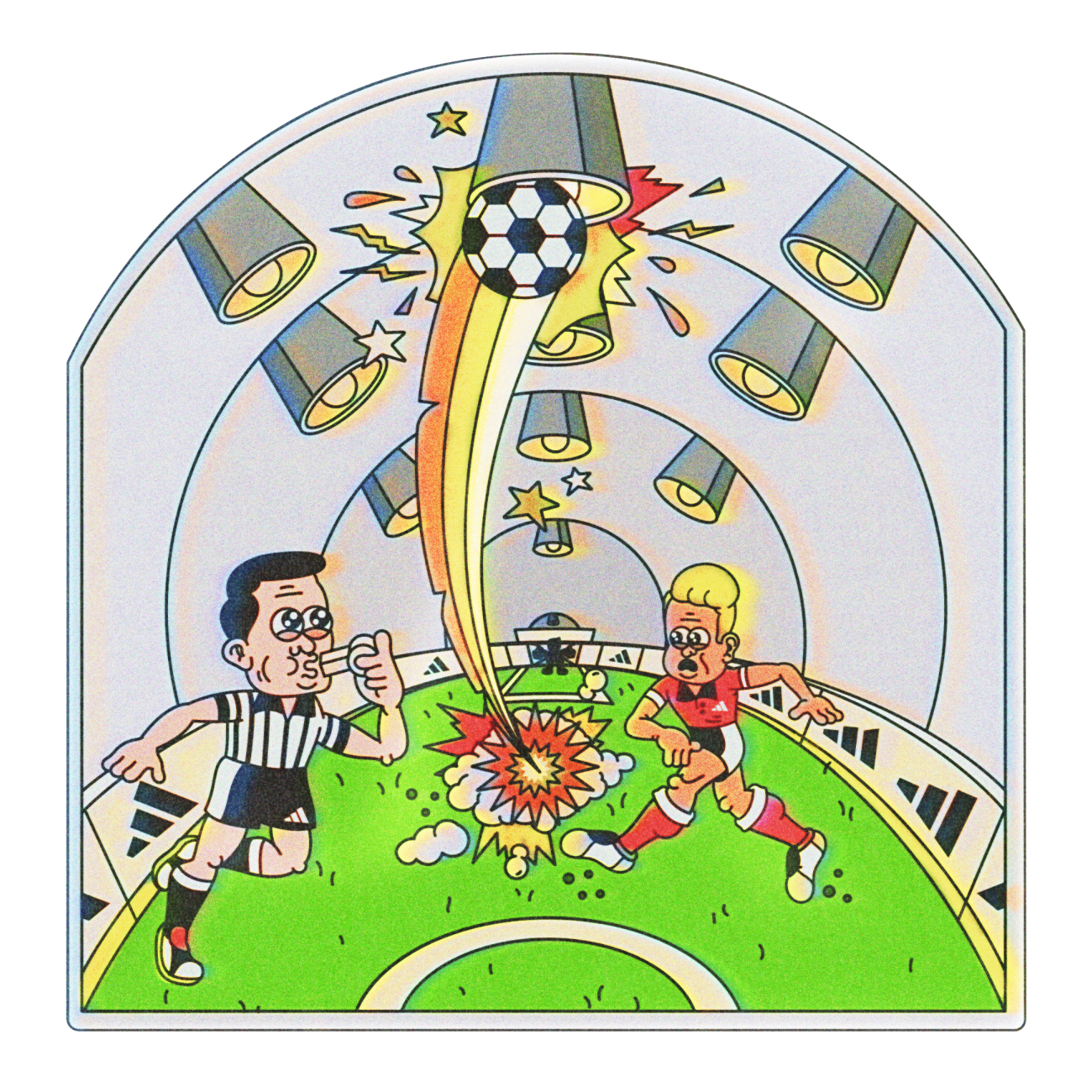
Most common soccer rules like fouls, handballs, and yellow and red cards remain the same in indoor soccer, so if you’re in-the-know on those, you’ll be pretty good to go. But it is important to keep in mind that slide tackles, which are more dangerous when walls surround the field, are commonly forbidden to keep players safe.
A bit of good news: One of the most controversial and harder rules to comprehend in soccer, the offside, doesn’t exist in this variation. However, there are some rules or violations commonly used in the indoor soccer variations, like the Three-Line pass. This violation awards a free kick to the opposite team when any player plays the ball over two thirds of the field without touching another teammate.
Just a heads up! When it comes to gear, there are no overarching rules about what shoes to wear, so it all depends on the field owner where you’d be playing. But if you’re asking yourself, “Can you wear soccer cleats for indoor soccer?” the general answer tends to be that most indoor facilities with turf allow traditional firm ground cleats, but many players prefer to use a turf soccer shoe with more and shorter cleats than a traditional firm ground cleat.
If you already have the cleats of your choice, you have found the field, and your group of friends are ready, remember the ball. There are various responses to the question, “Which ball should I bring?” If you have a traditional size 5, it is okay to use it, but if you have younger kids, they will have a better experience with a smaller ball, size 4 or 3. Either way, both are great options.
TRANSFERABLE SKILLS & BENEFITS OF INDOOR SOCCER
Whatever your soccer skill level, there are lots of reasons to consider giving indoor soccer a try. Looking to improve your footwork skills? An indoor soccer field with its smaller indoor soccer goal size and walls is a great option, as you will need to navigate the smaller spaces and react faster to opponents. For a new player, indoor soccer can also be a less-intimidating introduction to soccer because it develops the fundamental skills faster, which are then transferable to all variations. How’s that for a solid foundation?
Also, if you are looking for a sport to play year-long, indoor soccer is a great option for avoiding the elements during cold, rainy, or very hot days. Plus, finding 12 players to play 6-a-side will always be easier than finding 24 for a traditional soccer game.
THE BEAUTIFUL GAME
Indoor soccer, and especially 6-a-side with surrounding walls, is a sport that invites you to play. It is fun, fast and—for many—the quickest way to step into the beautiful game. Even when the rules and formats vary, indoor soccer embodies the gentle touch of an easy sport to learn and practice. It is a common language. The only thing you need to start your journey is a ball and to lace up your shoes.
Illustrations by Hunter French